Technical Details
of Violins
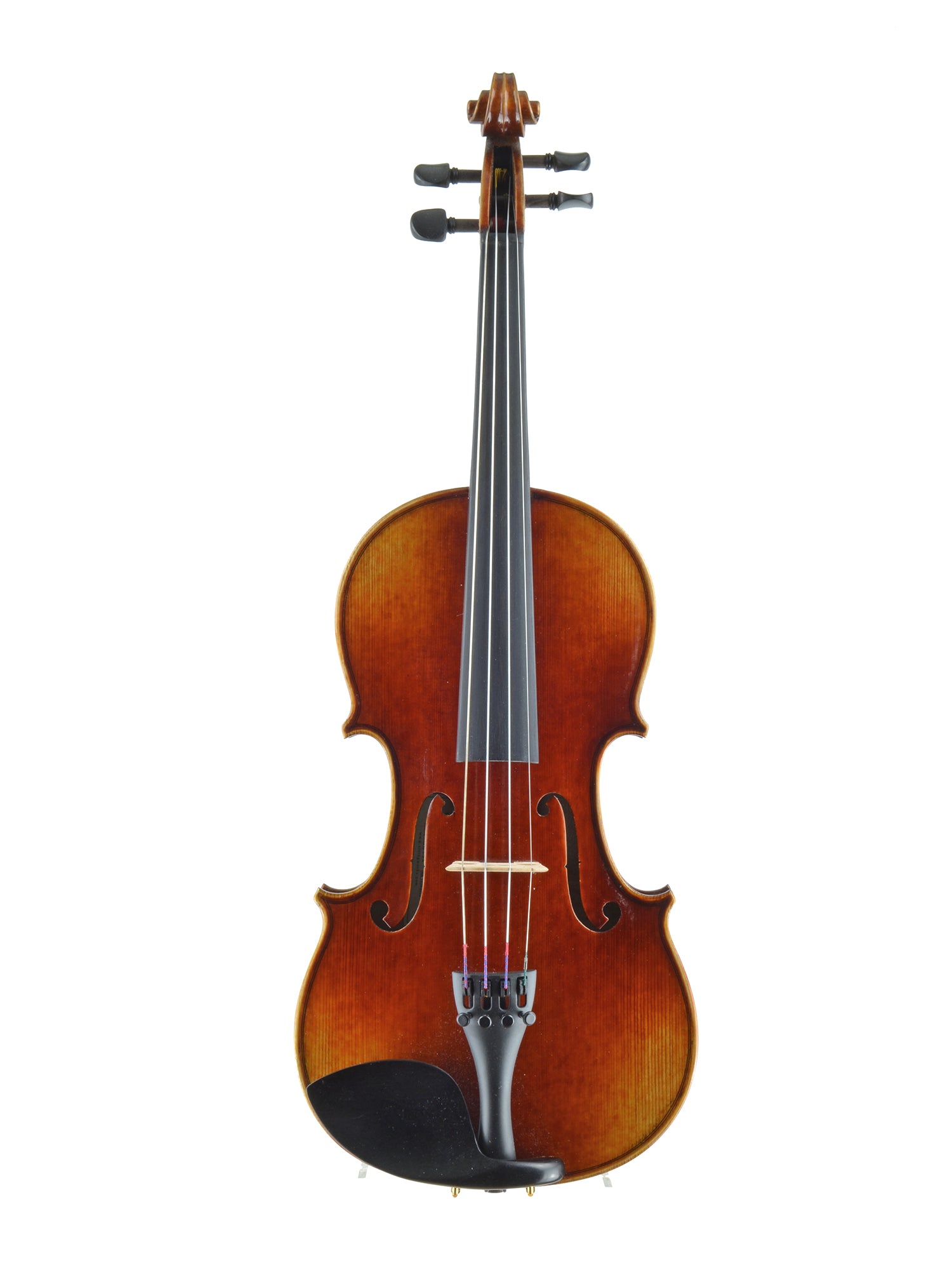
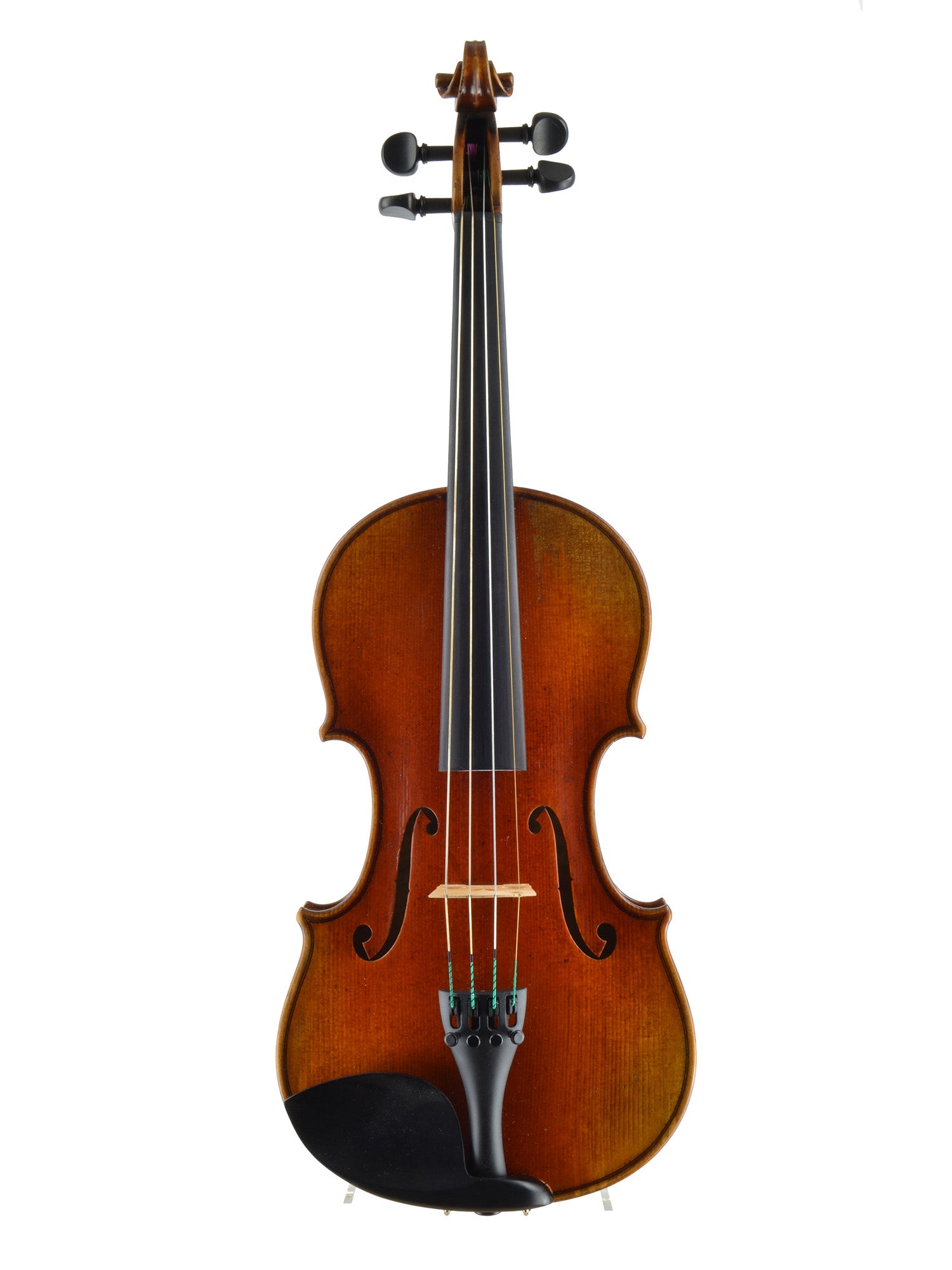
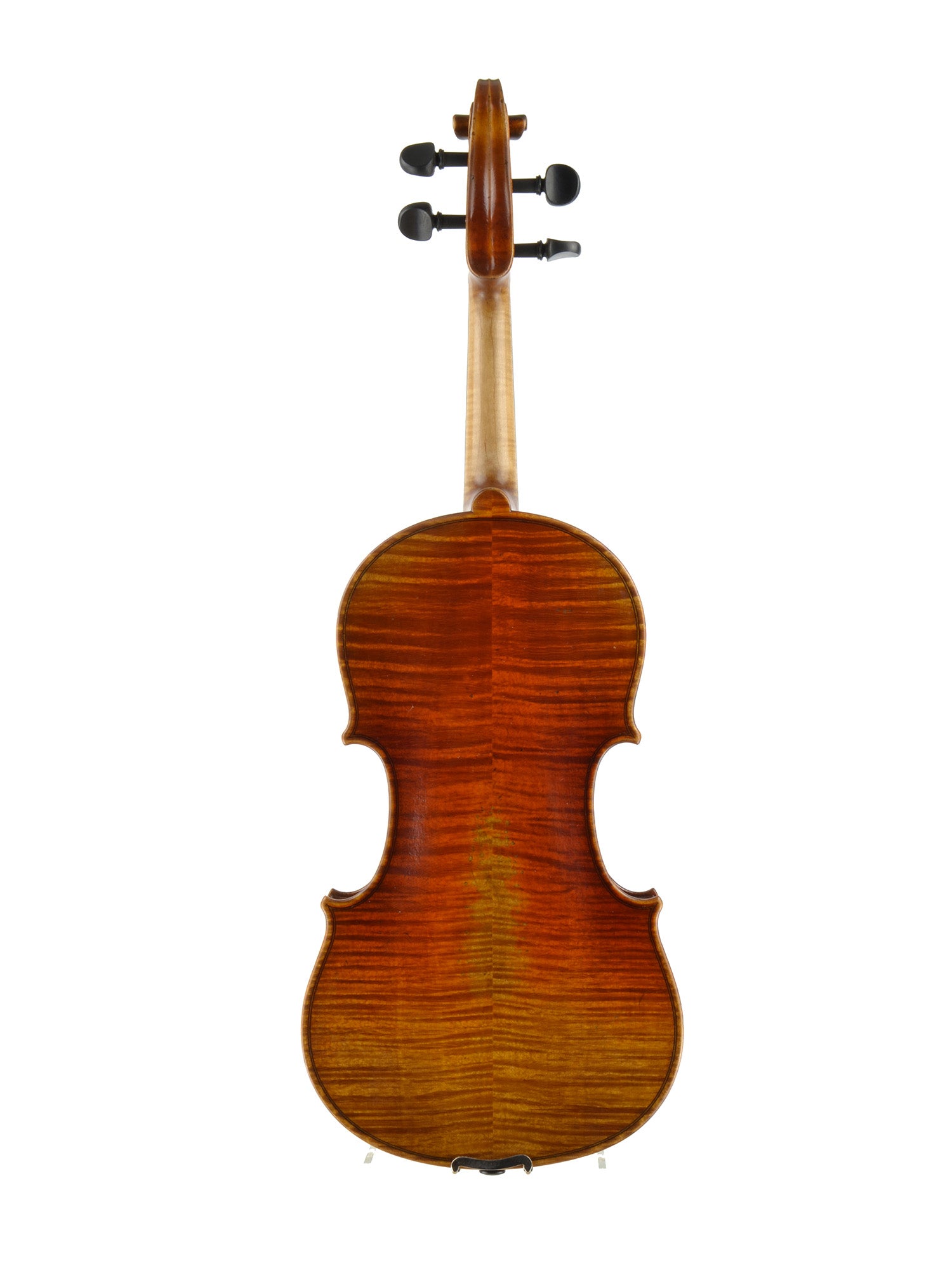
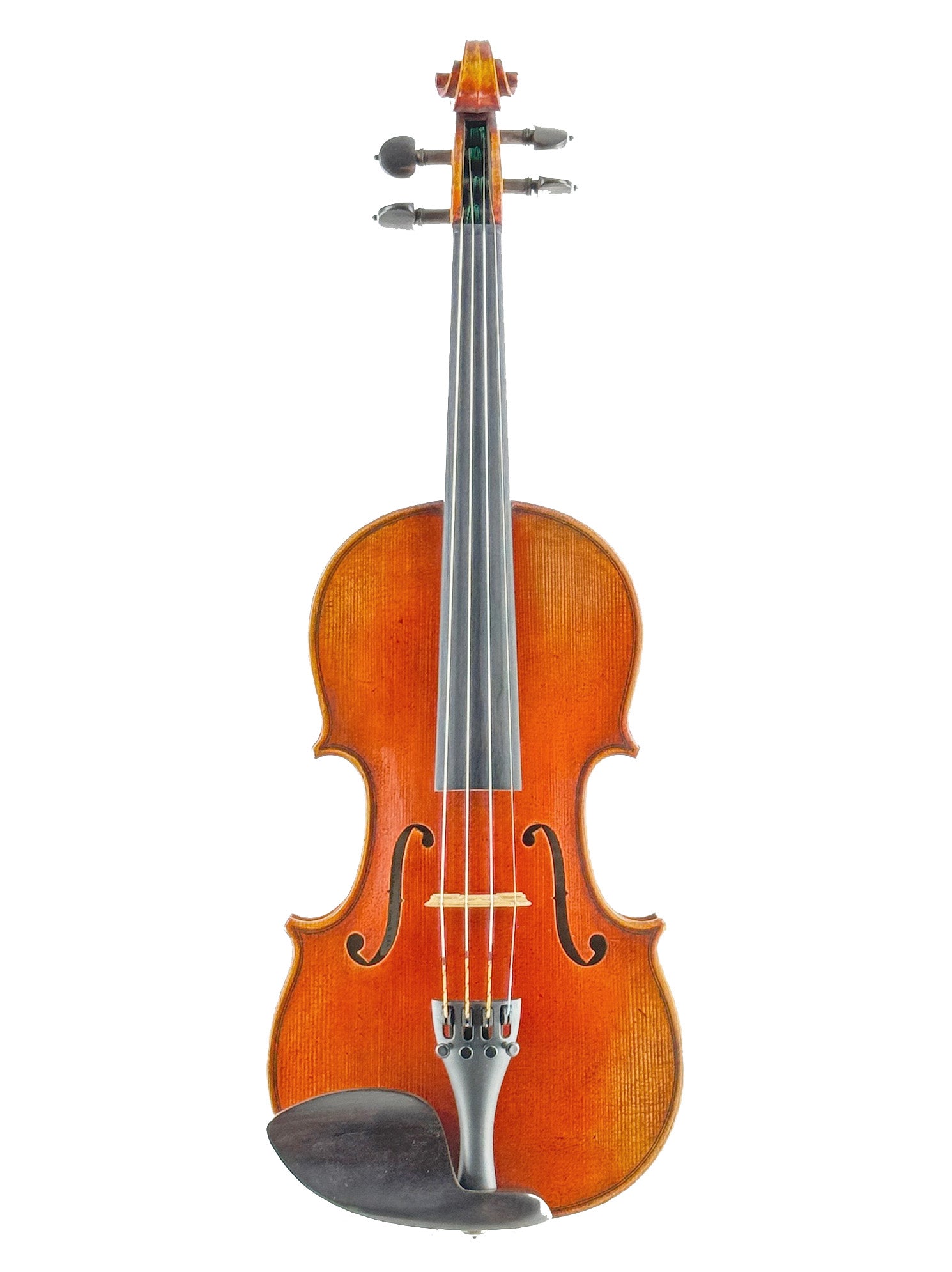
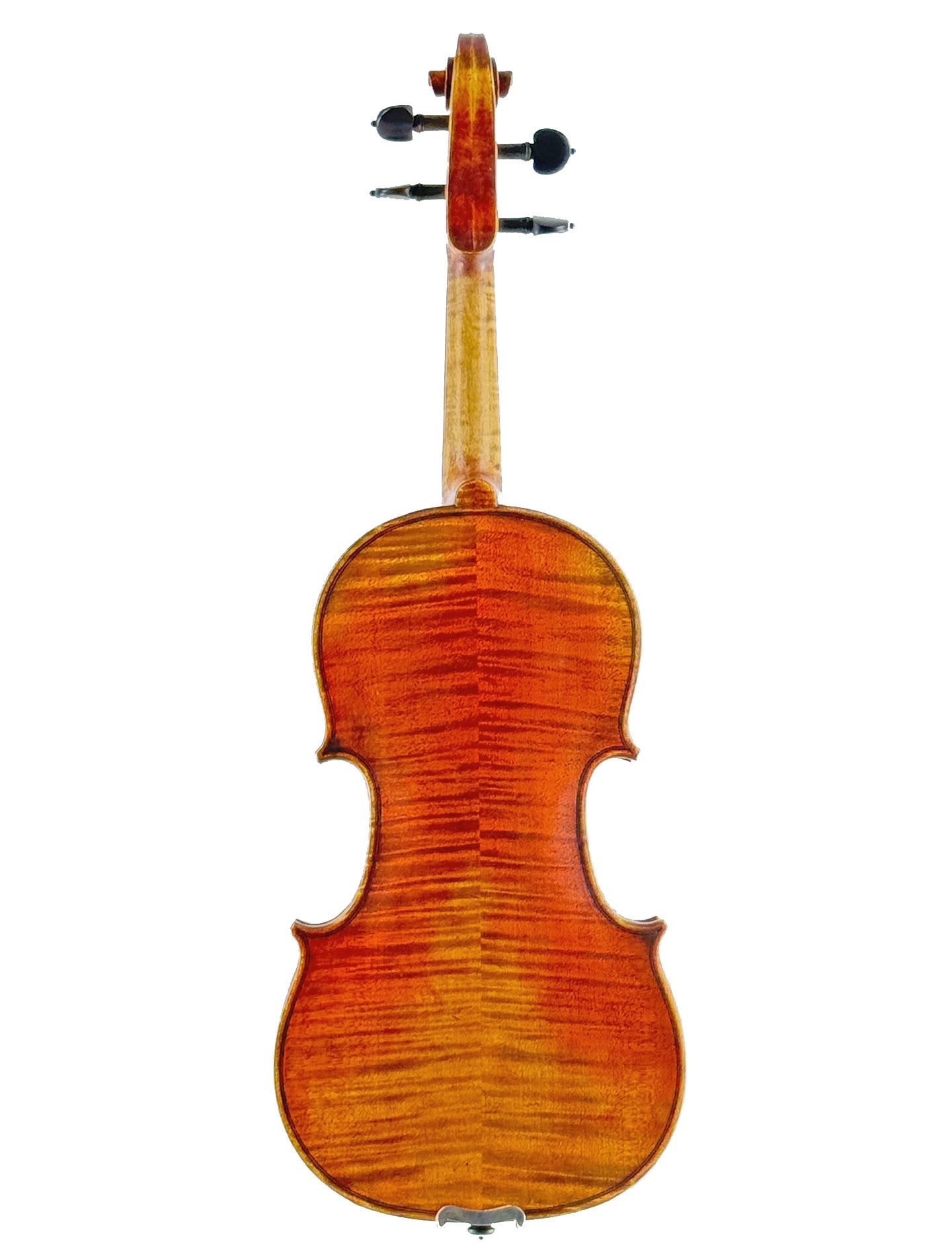
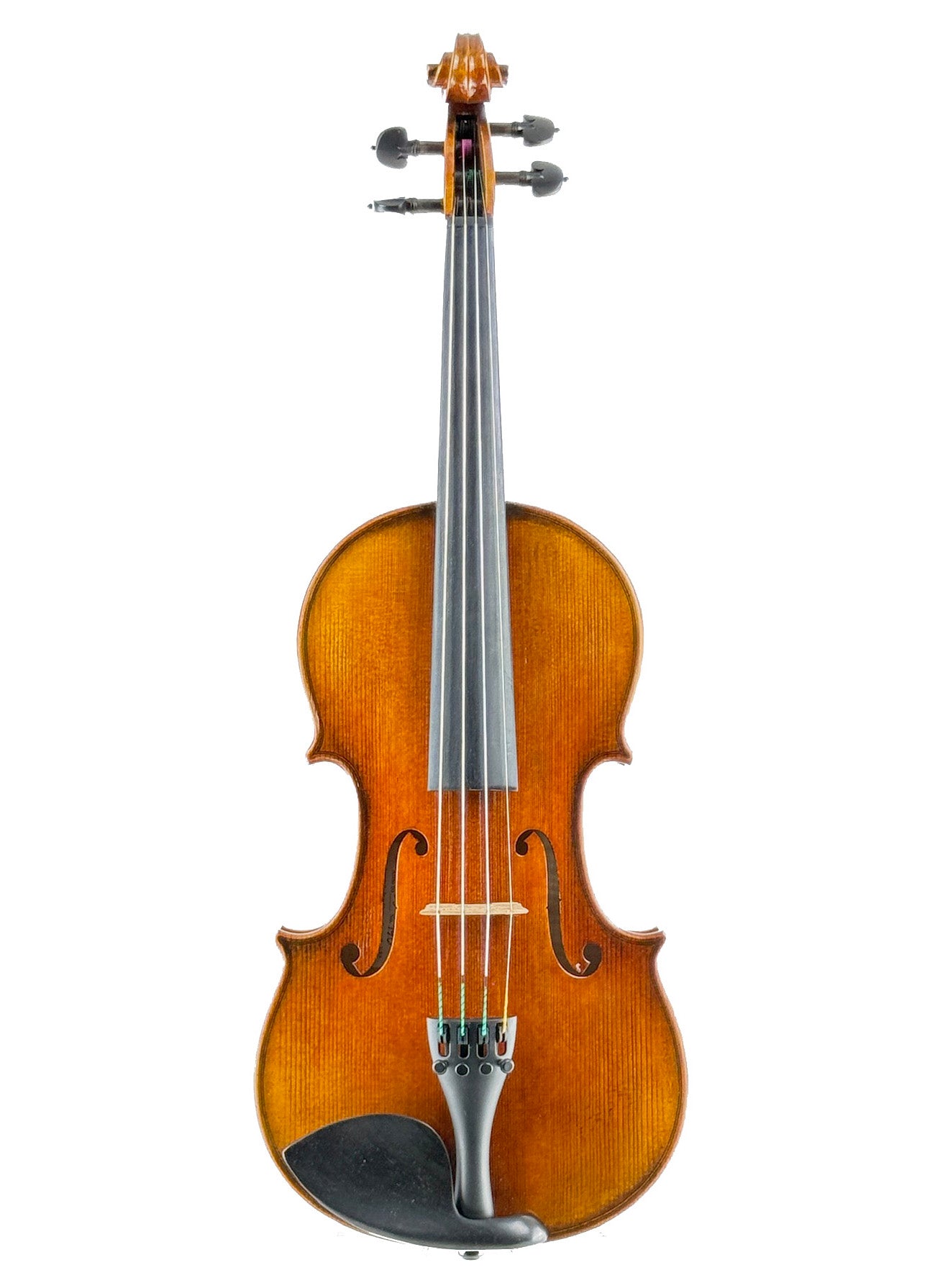
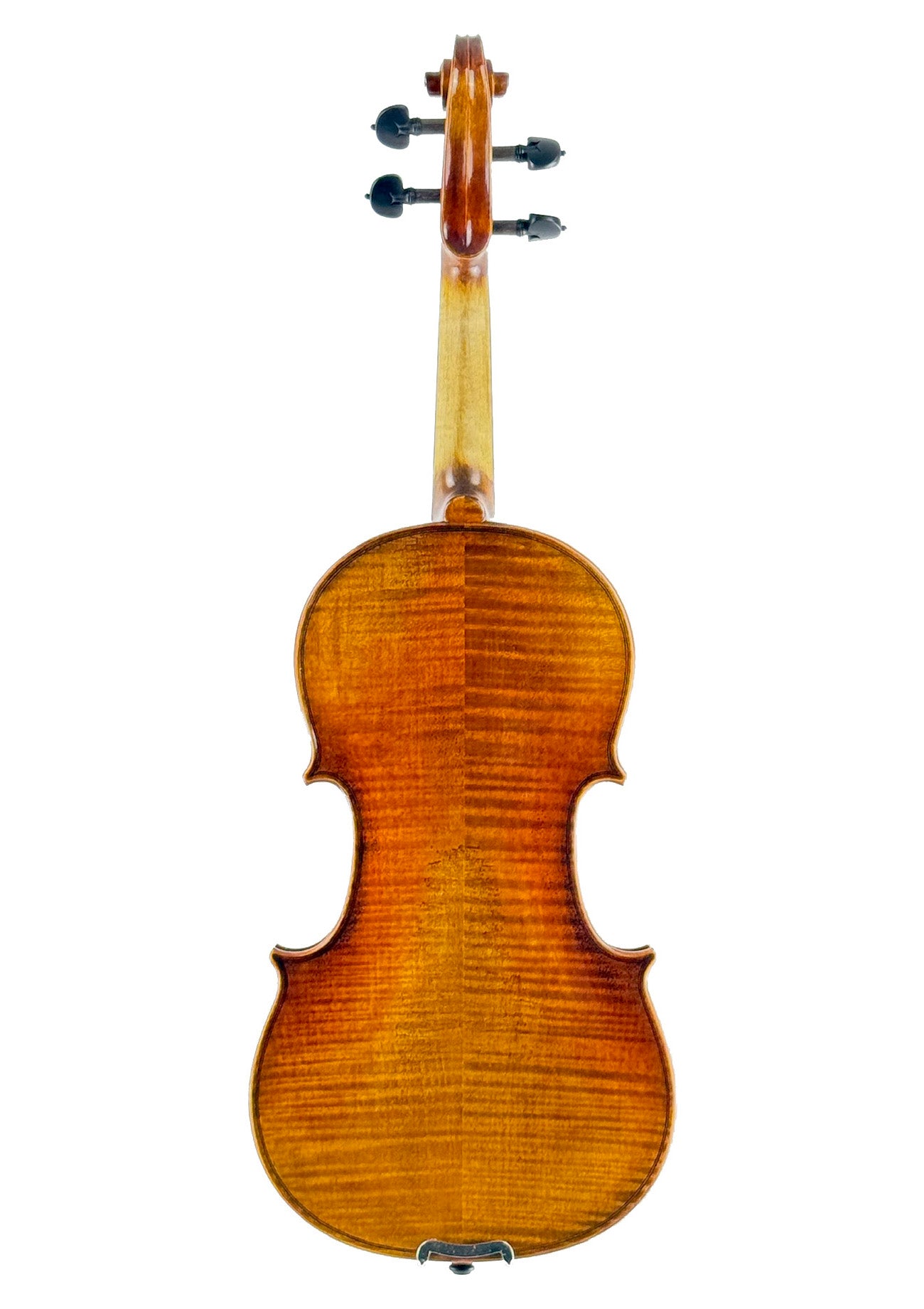
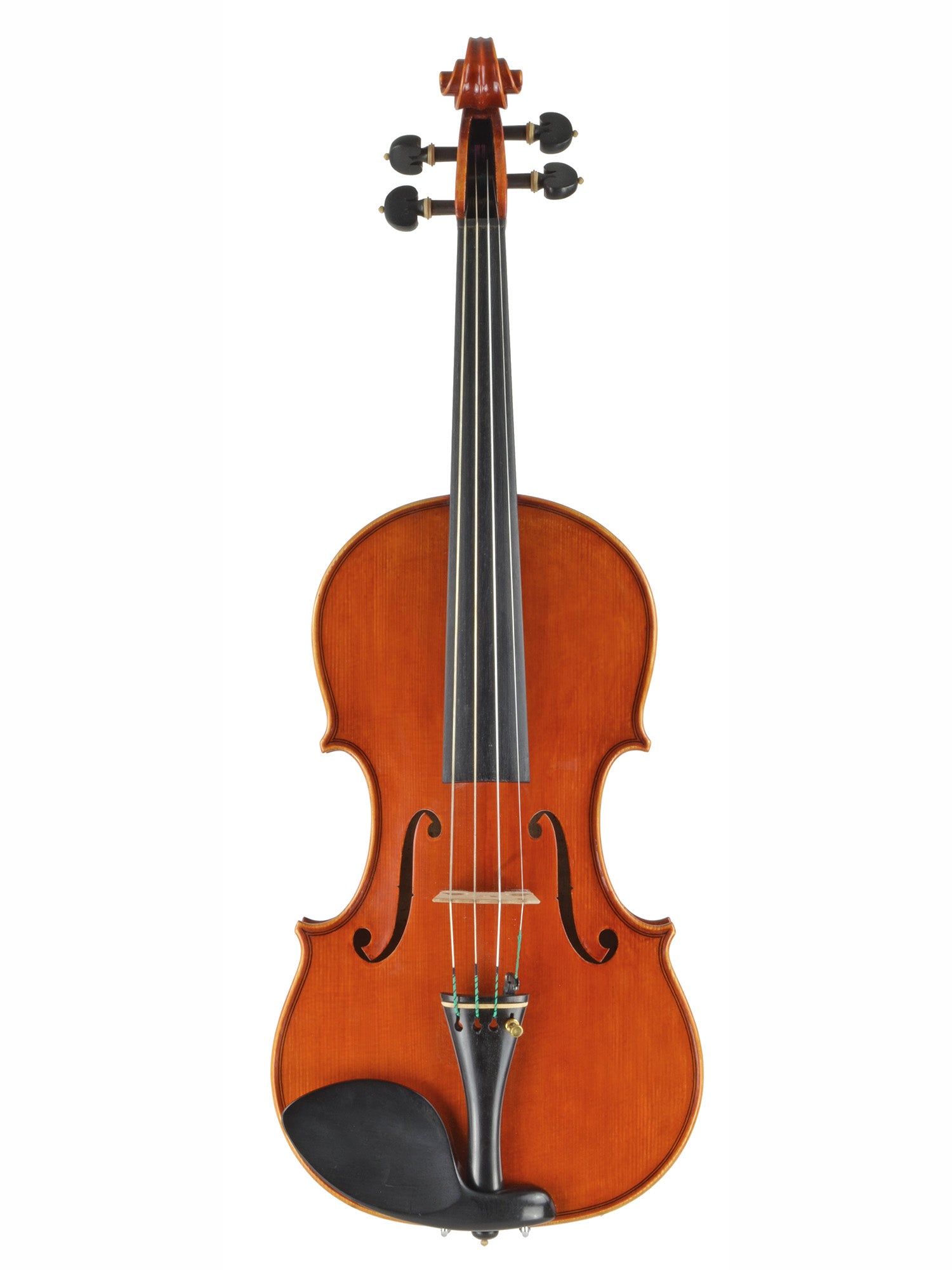
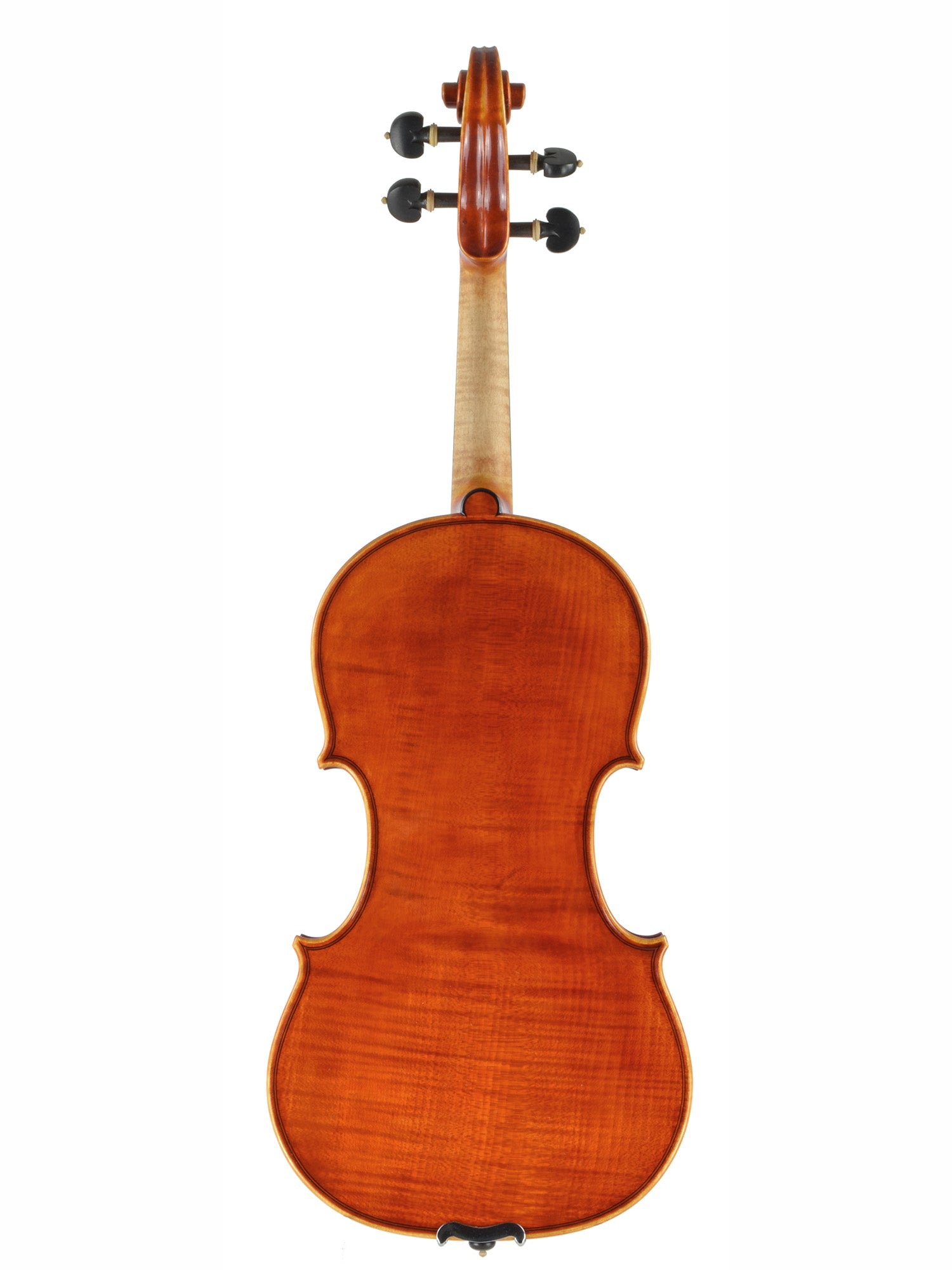
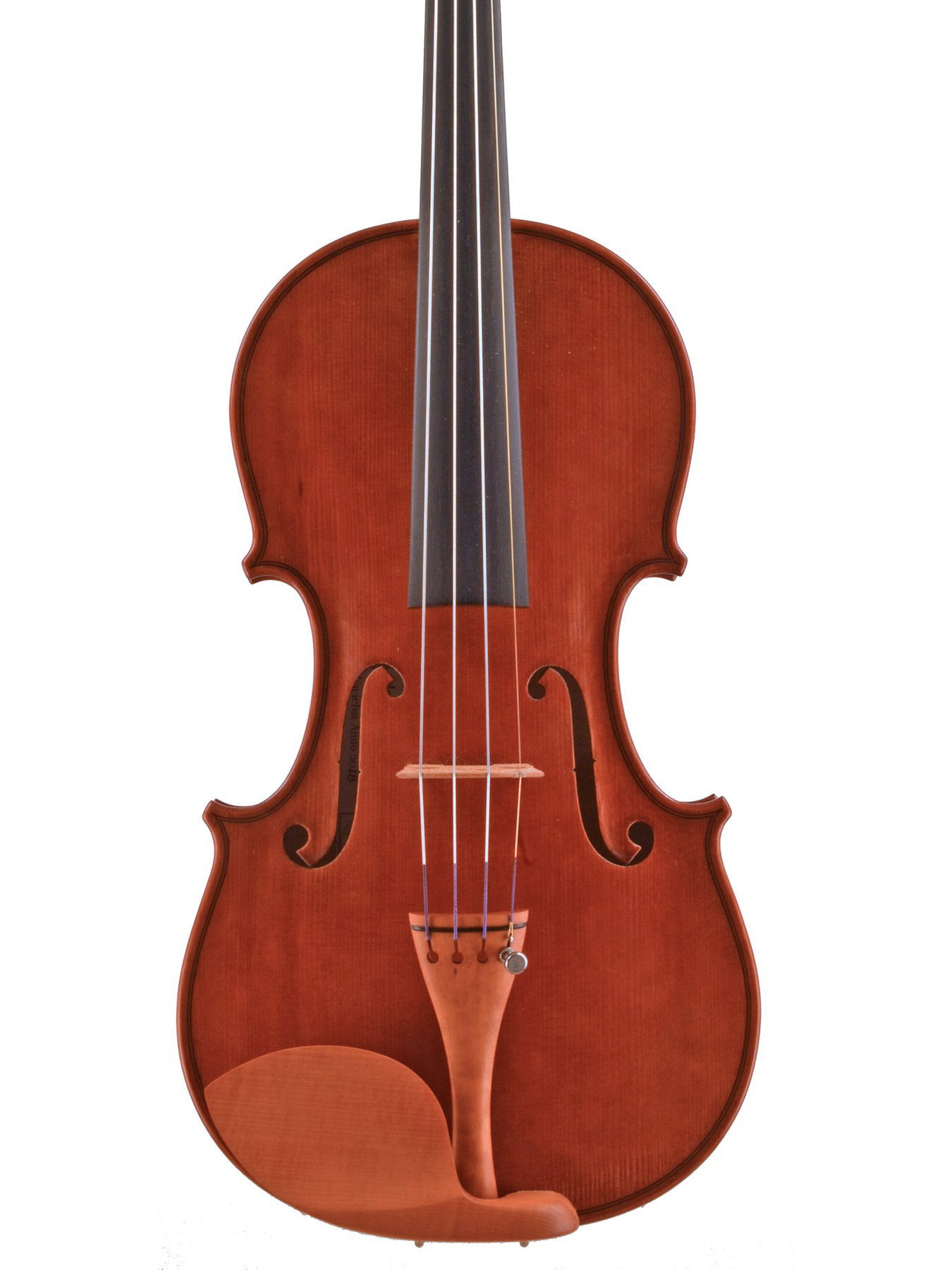
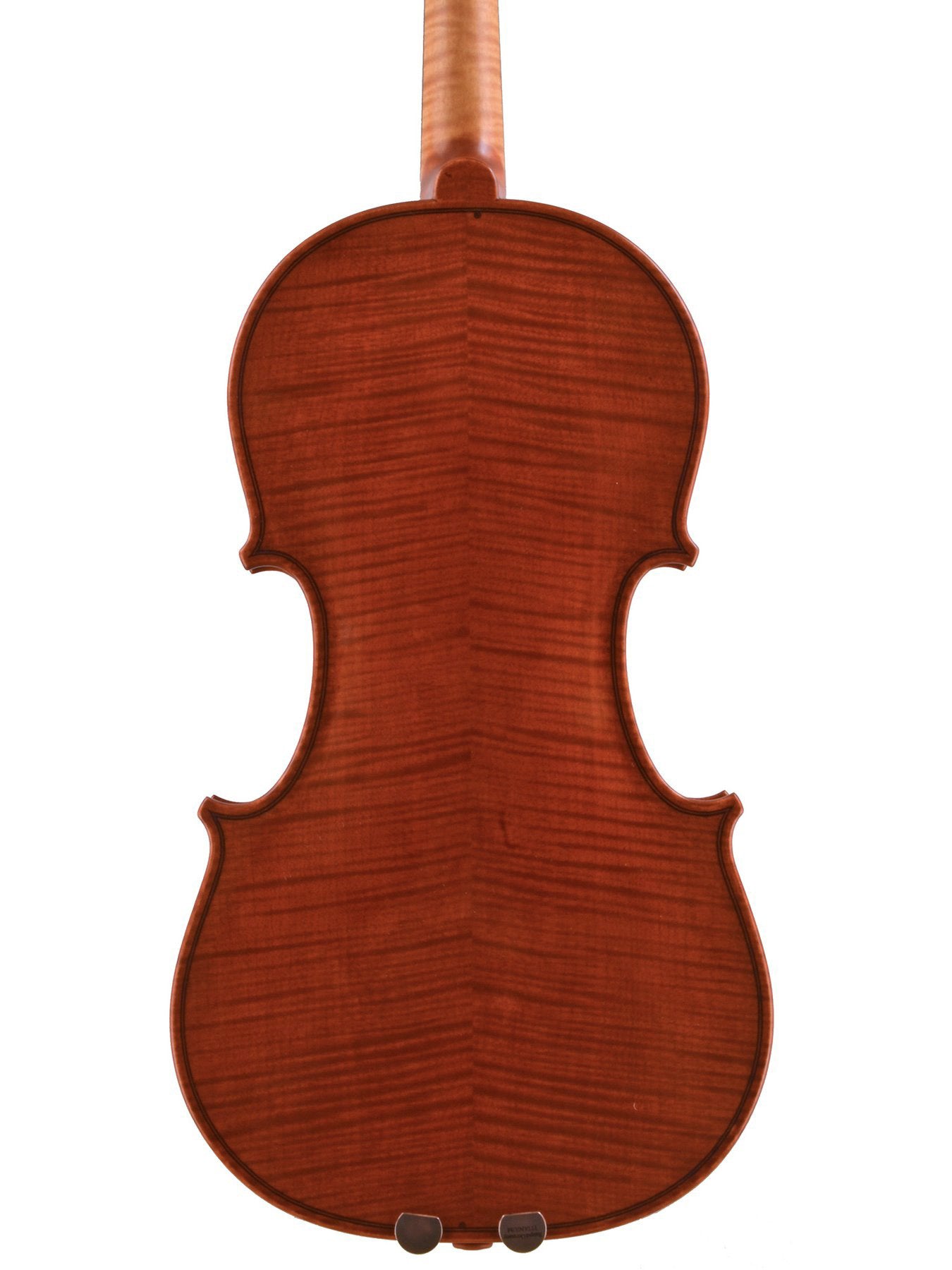
The violin, the most commonly used member of the modern string
family, is the highest-sounding instrument of that group. Its
four strings are stretched over a high arched bridge that permits
the playing of one or two strings at a time, as well as the nearly
simultaneous sounding of three or four as chords. The overall
length of the violin averages about 23.5 in (60 cm), whereas the
sounding length of the strings, from bridge to the nut at the
end of the fingerboard, is about 12.75 in (32 cm). The instrument
is held on the left side of the body, while the right hand holds
the bow. The wider end of the instrument is placed between the
player's left shoulder and chin, while the left hand encircles
its neck, the fingers stopping the strings to produce the various
pitches. Sound is produced by drawing the bow across the strings
to make them vibrate, or by plucking the strings (PIZZICATO).
The range of the violin extends from G, the lowest open string,
upward nearly four octaves. The strings are tuned a fifth apart
at G3(196 Hz), D4, A4, E5(659.3 Hz).
Many consider that violin making reached its pinnacle in the work
of Antonio Stradivari and Guiseppe Guarneri in the 18th century.
Although the basic construction of the violin has been long established,
the subtle variations which make an outstanding violin are the
stuff of legend.
The sound quality can be changed considerably by the place where
the string is bowed. If bowed close to the bridge (sul ponticello)
then the sound is brighter with more harmonic content. If bowed
further from the bridge (sul tasto) then the sound is darker,
more mellow with less harmonic content. StringWorks.com offers
you a variety of violins for sale to
choose from.
The violin is a stringed musical instrument that originated in
Northern Italy, during the sixteenth century. It is believed that
the Medici family commissioned Andrea Amati to create a high-quality
instrument that could be used by street musicians; the result
was the violin. In the early eighteenth century Antonio Stradivari
created what is known as the perfect violin. Since then, there
has been very little advancement in the design of the violin.
The violin is the smallest member of the strings family. It is
also the highest-tuned instrument of the family. The strings of
a violin are tuned a perfect fifth apart. The lowest string is
the G, followed by middle C, then D, A and E.
Bowing Methods, or Techniques, for Violin
The sound of a violin is generated by the act of drawing
the bow across the strings. There are several techniques for bowing
the violin that produce different sounds and effects. These techniques
are known as detache, legato, sautille, col legno, and chopping.
Detache is a term that refers to notes that are disjointed, while
legato is a style of playing where each successive note connects
seamlessly with the next note. Sautille is a technique that is
difficult to recognize. In this technique, the bow stroke is very
rapid. with one stroke per not and the bow bouncing slightly off
the string for each note played. Col legno is an interesting technique
in which the strings are struck by the back of the bow. This creates
a percussive sound that can be very dramatic when performed by
the entire orchestral violin section.
In order to produce enough volume for a desired effect, it is
often necessary to enlist all of the violin members in an orchestra.
Chopping is another technique that has a percussive effect. This
technique involves striking the strings with the hair near the
bottom of the bow, and is most commonly employed by jazz musicians.
|