

How Much Should I Spend on a Violin?
How Much Should I Spend on a Violin?
The short answer: spend as much as you can, but only on a quality instrument. A well-made violin holds its value. A violin-shaped object from Amazon does not — and worse, it will actively slow down your progress.
The longer answer depends on where you are as a player. Use the guide below to find your level, then see what we have in stock right now.
Find Your Level
Beginner
$495–$895
Who this is for: New players, returning adults, students up to ~2 years in.
Solid hand-carved tonewoods, full luthier setup. A real instrument that rewards practice instead of fighting it.
Crescendo Violin — easiest response, great starter
Artist Violin — best balance of quality and value
Most popular
Intermediate
$895–$1,495
Who this is for: Advancing students, serious hobbyists, anyone who knows they'll stick with it.
Buy ahead of your level. Premium tonewoods, richer harmonics, stronger projection — trades in at 100% of purchase price when you're ready to step up.
Virtuoso Violin — rich tone, immediate upgrade feel
Maestro Violin — professional features, intermediate price
Professional
$1,495 and up
Who this is for: Conservatory students, working musicians, serious collectors.
Aged Himalayan spruce and maple, master-level setup, exceptional evenness and projection. These appreciate in value.
Soloist III Violin — concert-quality performance
Browse all professional violins
✓ Every violin gets 3–5 hours of luthier setup ✓ 14-day free home trial ✓ 100% trade-in credit on first upgrade ✓ Lifetime guarantee ✓ Founded by a former LA Opera cellist
Complete your setup: browse our violin bows and cases.
Want the most violin for your budget?
Pre-owned and trade-in violins are often tonally richer than new — the wood has already opened up — and priced lower. They move fast.

Still not sure? Call us.
Todd French founded StringWorks after 17 years with the Los Angeles Opera. Call and you'll likely talk to a real musician — not a sales rep. We'll tell you honestly what you need, even if that means spending less. We've been at this since 1997.
The Full Story: What Determines Violin Price and Quality
Want to understand the "why" behind violin pricing? Read on. If you're ready to shop, you've already got what you need above.
Quality — What Drives the Price?
Wood and workmanship are the two primary cost drivers. A violin made by a skilled luthier using higher-quality tonewoods will carry a higher price — and deliver better results. The older and more aged the wood (straighter, even grain on spruce; well-flamed maple), the greater the cost in raw materials. Any violin under $400 typically uses laminated wood rather than solid spruce and maple. The difference isn't just aesthetic — laminated wood vibrates less efficiently, produces less resonance, and actively works against a developing player. You'll fight the instrument instead of playing it.
Higher quality materials also showcase the natural beauty of the wood — from perfectly grained spruce to gorgeously flamed maple — and enable much easier sound production, revealing depth, resonance, and tonal colors that lesser instruments cannot produce. A quality violin is also an investment: it holds its value, and instruments at the Soloist level and above regularly appreciate over time.
Origin — Where Are the Best Violins Made?
Nearly every violin under $3,000 is made in China today, because they have the skilled labor and access to raw materials that other countries cannot match at these price points. Many Chinese makers have won gold medals in Violin Society of America (VSA) competitions. The early reputation (1995–2005) for low-quality Chinese instruments was deserved at the time, but the best shops in the world — including StringWorks — have spent decades building relationships with specific Chinese workshops, and the results now rival anything produced anywhere at these price ranges. We also work with workshops in Romania and Europe for certain instruments.
Rental vs. Buying — What Makes Sense?
For very young beginners who will outgrow sizes quickly, rental can make short-term sense. For anyone past the initial sizing question — students who have settled into a full size, returning adults, serious learners — buying is almost always the better financial move. Our trade-in program gives you 100% of your original purchase price toward your first upgrade, which eliminates the main risk of buying: the fear of outgrowing an instrument.
Other Things to Consider
- Size: Violins come in multiple sizes — nearly all adults play full size (4/4), but children need to be measured. Getting the right size matters as much as the instrument itself.
- Playability: A less expensive instrument can sometimes feel better in your hands than a more expensive one. Trust your instincts on feel.
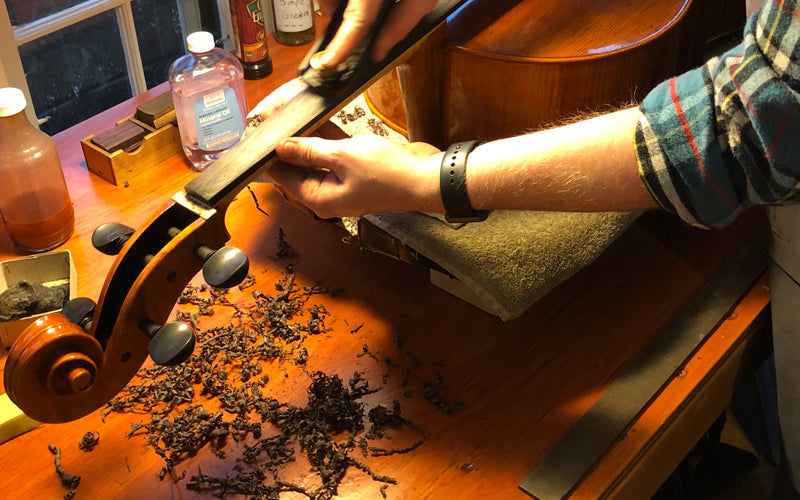
- Setup: The setup is often more important than the instrument itself. Every violin we sell receives our StringWorks Setup™ — 3–5 hours of luthier work that most shops skip entirely.
- Service after the sale: We offer full repair and restoration in-house. You won't be on your own after the purchase.
Updated 2026 · Todd French, Founder/President, StringWorks, Inc.